 MailerLite
 ActiveCampaign
 Omnisend
 Klaviyo
 SE Ranking
 Mangools
 Semrush
 Ahrefs
 Pipedrive
 Zoho CRM
 Salesforce
 HubSpot
 Systeme.io
 GoHighLevel
 ClickFunnels
 Vendasta
Usage-based pricing in SaaS
Per-seat pricing tells you what you will pay. Usage-based pricing tells you what you paid. That difference is the whole story, and after pricing 20+ marketing tools we can say exactly where it helps buyers and where it quietly costs them.
RealCostLabs is independent and reader-supported. We may earn a commission on purchases made through our links, at no extra cost to you, and our scores are never for sale.
The four models you will actually meet
| Model | You are billed on | Predictable? | Example |
|---|---|---|---|
| Per seat | People with a login | Yes | Pipedrive $39/seat, Salesforce $175/user |
| Per stored record | Contacts held, engaged or not | Partly | Klaviyo, Mailchimp, HubSpot marketing contacts |
| Per action | Emails sent, reports run, calls made | No | Brevo (sends), Ahrefs (credits) |
| Hybrid | A base fee plus metered extras | No | Klaviyo SMS, GoHighLevel |
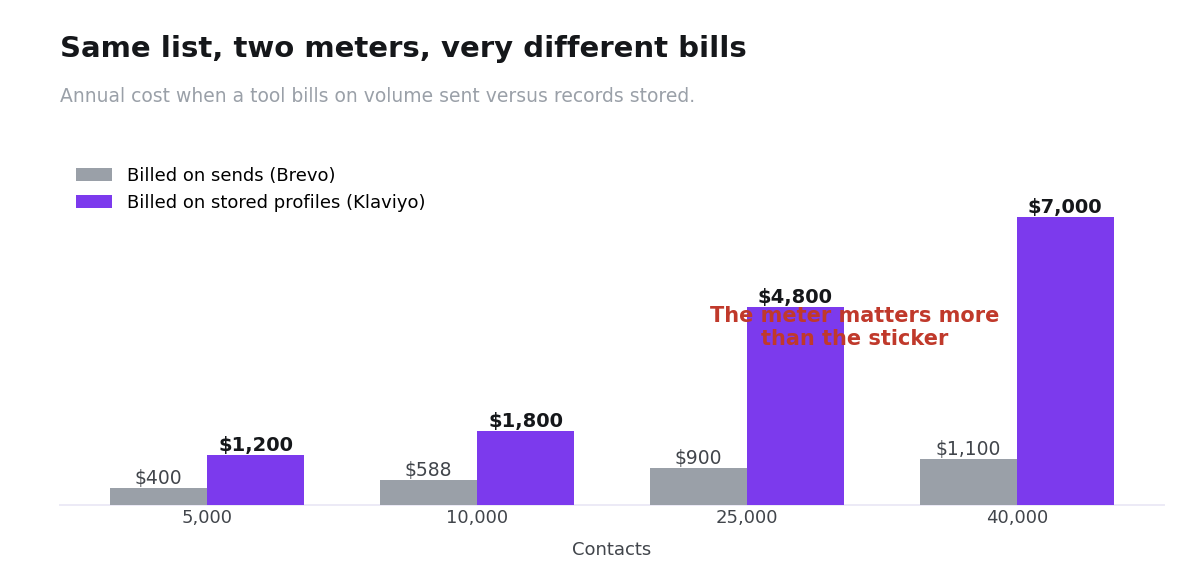
Comparing tools as if they were all per-seat misses the point: they are not, and the model matters more than the sticker.
Where usage-based pricing helps you
- Large, quiet lists. If you hold 40,000 contacts and email them monthly, paying per send is dramatically cheaper than paying per stored record. This single distinction is why Brevo costs $49 at 10,000 contacts where Klaviyo costs $150.
- Seasonal businesses. You pay in your busy months and not in your quiet ones, which matches revenue.
- Getting started. Low usage means a low bill, genuinely, rather than a low tier with the features removed.
Where it costs you
- You cannot budget it. Finance wants a number. Usage-based pricing gives a range, and the range widens exactly when the business is working.
- Success raises the bill. A campaign that performs increases sends, credits and overage. The tool gets more expensive precisely because you used it well.
- The meter charges for dead weight. Being billed on contacts stored means paying for people who unsubscribed two years ago. Mailchimp counts contacts you have not manually archived and does not deduplicate across audiences; Klaviyo bills on every profile you keep.
- Step functions hide inside it. Klaviyo’s ladder rises 50% between 10,000 and 11,500 profiles — a 15% list increase for a 50% bill increase.
The question that picks the model
Not “which is cheaper” but “what does my usage actually look like, and is it lumpy?”
| Your situation | Pick | Why |
|---|---|---|
| Big list, infrequent sends | Per action | You are not paying to store people |
| Small list, daily sends | Per stored record | Send volume would punish you |
| Fixed team, steady work | Per seat | Perfectly predictable |
| Bursty research or campaigns | Avoid credits | Busy months cost double |
Four questions to ask before signing anything metered
- What exactly is the unit? Contacts stored, contacts engaged, emails sent, reports run. Vendors use the same words for different meters.
- What happens at the ceiling? Hard stop, automatic upgrade, or overage billing. All three exist and they behave very differently on an invoice.
- Where are the step boundaries? Get the full ladder, not the tier you are quoting. The step you meet next year is the one that matters.
- Can I clean the meter? If you are billed on stored records, find out how to suppress or archive, and put it in the calendar quarterly.
What we found across 20+ tools
- The plan buyers realistically end up on costs 3.9× the advertised entry price on average.
- Monthly billing costs 44% more than annual, and the premium is steepest on the cheapest plans — the ones small businesses buy.
- Two email platforms serving the same 10,000-contact list differ by 3.9×, almost entirely because one meters sends and the other meters storage.
- Per-user surcharges reach $100 a month, turning an advertised price into something 64% higher for a three-person team.
Full dataset and methodology: marketing software pricing statistics.
Common questions
Is usage-based pricing cheaper?
Only if your usage is genuinely low or lumpy. For steady heavy use it is usually more expensive than a flat tier, because the vendor prices the meter to win the comparison and recover on volume.
What is the difference between usage-based and per-seat?
Per-seat bills on people with a login and is predictable. Usage-based bills on what you do and is not. Many tools now combine both.
Why did my SaaS bill go up without me changing plan?
Almost always a meter. More contacts stored, more emails sent, more reports run — or a tier boundary crossed automatically.
Which email tool has the best pricing model?
It depends on your shape. Brevo bills on sends, which suits large quiet lists. Klaviyo and Mailchimp bill on stored contacts, which suits small lists mailed often.